Knowledge Base Strategy
Knowledge Base Strategy
I created a documentation structure that separated customer help content from internal support content and made both easier to search, publish, and maintain.
From Support Folder to Searchable Knowledge Base
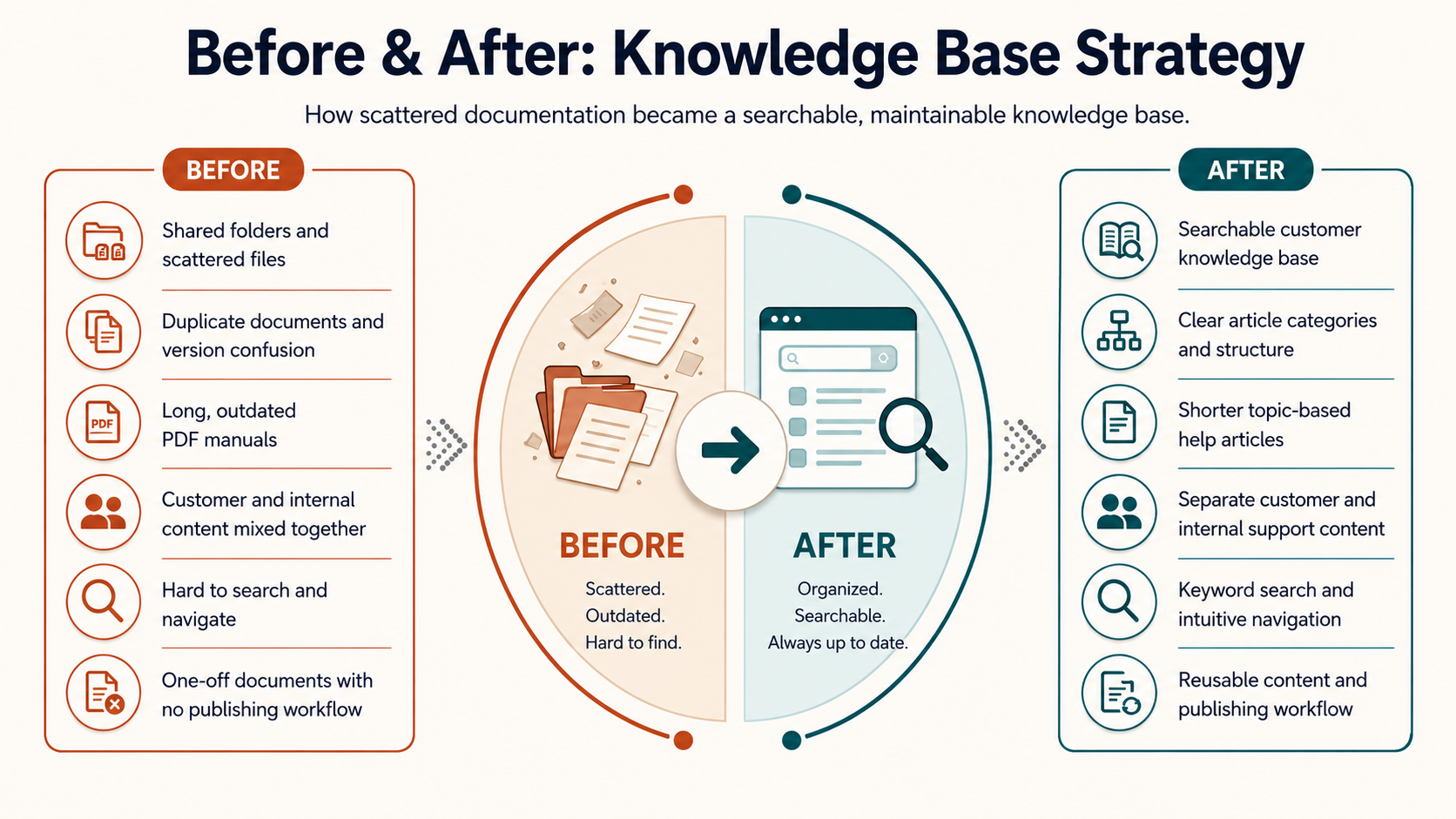
How the Documentation Strategy Changed
This before-and-after view shows how scattered files, outdated manuals, mixed audiences, and one-off documents were transformed into a searchable and maintainable knowledge base structure.
Results
- Easier to find, publish, reuse, and maintain content
- Customer-facing and internal documentation cleanly separated
- Stronger foundation for governance and future updates
Challenge
Customers often relied on support for software-related questions that could have been supported through clearer self-service documentation. Internally, support documents were stored in shared folders with duplicate files, inconsistent organization, and limited keyword searchability. Some customer-facing documents were available online, but they were outdated, lengthy, and difficult to navigate.
Approach
I developed a knowledge base strategy focused on structure, searchability, and long-term maintainability. This included identifying the right platform for a single-source publishing environment, separating customer-facing documentation from internal technical support content, and organizing content around how users search for help.
I also created a documentation workflow that included folder organization, reusable content standards, and publishing steps for both HTML and PDF formats.
Outcome
The result was a more organized documentation system that made content easier to find, publish, reuse, and maintain. Customer-facing help content could be delivered through a searchable knowledge base, while internal technical documentation remained separate and more detailed for support use. The new structure also created a stronger foundation for documentation governance, future updates, and scalable content development.
From Documentation Disarray to One Connected Experience
These conceptual mockups demonstrate how the documentation experience could evolve from disconnected folders, outdated website content, and lengthy PDF manuals into one centralized knowledge base that supports search, responsive access, and downloadable documentation.
Before: Documentation in Disarray
Documentation was spread across shared folders, an outdated website, and lengthy legacy manuals. Duplicate files and unclear versions made information difficult to locate and maintain, while customers often had to contact support for assistance.
After: Knowledge Base in One Place
The proposed knowledge base brings customer and internal content into a clearly organized publishing environment. Users can search by topic, access articles from desktop and mobile devices, and download PDF versions when needed.
Conceptual portfolio mockups created to demonstrate the documentation challenges, proposed knowledge base experience, and multi-format publishing strategy. Company names and proprietary information have been replaced.